What does being a whistleblower look like?
Learn about 5 critical steps in the whistleblower process – and how we can protect and help you each step of the way!
100% free & confidential
Learn about 5 critical steps in the whistleblower process – and how we can protect and help you each step of the way!
You think you have seen something that isn’t right. Whether it’s systematic overbilling on a government contract, a healthcare provider charging Medicare for services never performed, or a defense contractor supplying substandard parts, you suspect you have witnessed fraud against the U.S. government. Now you face a difficult question: What do you do next?
Standing up against fraud is a courageous and patriotic act. It protects American taxpayers and helps hold powerful entities accountable. The primary legal tool for a private citizen to do this is the federal False Claims Act (FCA), a law that dates back to the Civil War, when it was nicknamed the “Lincoln Law.”
The FCA allows a private individual with knowledge of fraud — known as a “relator” or whistleblower — to file a lawsuit on behalf of the United States government. This type of lawsuit is called a qui tam action. If the lawsuit is successful, the government recovers stolen funds, and the relator can receive a substantial reward for their courage and assistance.
The whistleblower process is not a simple one. It is a highly complex legal journey with unique procedures, timelines, and risks that an attorney who knows whistleblower law can help you navigate.
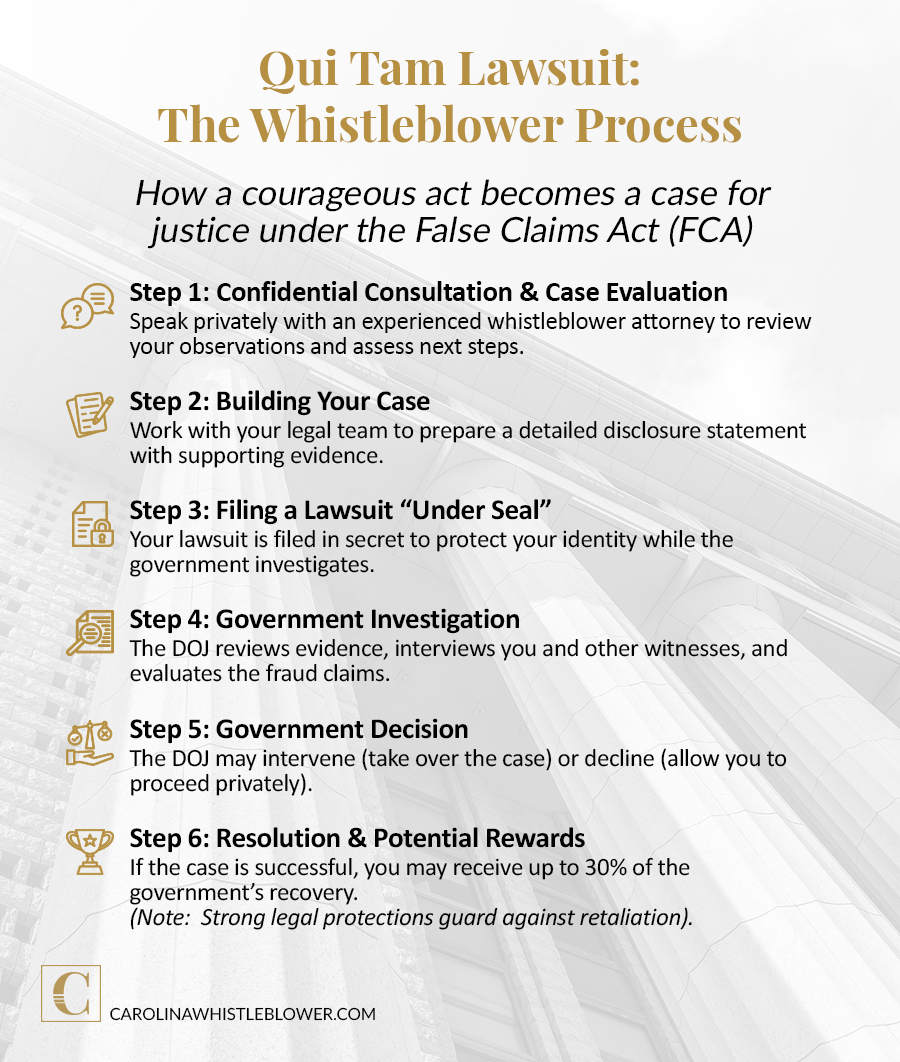
The very first step in the whistleblower process is to seek a confidential discussion with an attorney experienced in whistleblower law. This initial conversation is one of the most critical stages of the entire process. At Carolina Whistleblower Attorneys, this is a free and 100% confidential conversation where you can share your suspicions and learn your options in secret without obligation.
Your responsibility during this initial meeting is to be as detailed and honest as possible. Before the call, it can be helpful to organize your thoughts and any evidence you may have. Consider creating a timeline of events, noting who was involved, what fraudulent actions you observed, and when they occurred.

Important Note: Do not attempt to conduct your own investigation or gather additional documents you don’t already have legitimate access to. Doing so could alert the company to your activities and potentially put you in legal jeopardy. Bring what you know and what you lawfully possess, and let your legal team guide you on the next steps.
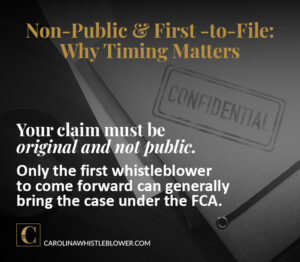
An experienced whistleblower attorney can listen carefully to your story. They will ask specific questions designed to determine if the facts you present could form the basis of a successful False Claims Act case. They will be evaluating several key elements:
At the end of this step, the attorney will be able to give you their candid assessment. Our team can help you weigh the pros and cons of moving forward, discuss the realities of the process, and explain the legal protections available to you.
If you and your legal team agree that you have a strong case and you decide to move forward, the next phase begins: building the formal case to present to the government. This is not just a matter of filing a lawsuit; it requires preparing a comprehensive package of evidence and information.
 At this stage, you may choose to officially retain our team, typically on a contingency fee basis. This means you will pay no fees unless we obtain a financial recovery for you.² Our fee is a percentage of any reward we achieve on your behalf.
The central document you and your attorneys will create is the Relator’s Disclosure Statement. This is a detailed, written narrative that lays out the entire fraud scheme. It’s essentially the story of the case, supported by all available evidence. It typically includes:
The goal is to create a compelling and well-documented “roadmap” for government investigators. The more thorough and organized this statement is, the more likely the government will be to take the case seriously.
Once the Disclosure Statement and the formal legal complaint are prepared, your attorneys will file your Complaint with the Court. This is where a critical feature of the False Claims Act comes into play: the lawsuit is filed “under seal.”
What does “under seal” mean?
 It is secret. When the government begins their investigation, the company you are accusing of fraud (the defendant) will not be notified that you’ve come forward.
The qui tam case must legally remain under seal for at least 60 days, with your identity remaining anonymous, while the government conducts its investigation.
During this time, it is imperative that you maintain absolute confidentiality. Do not discuss the case with anyone other than your attorneys.
While the case is under seal, the DOJ, often in conjunction with other federal agencies like the FBI or the Office of Inspector General for Health and Human Services (HHS-OIG), will conduct a thorough investigation into your allegations.
Your Disclosure Statement and evidence serve as their starting point. They may:
Your role during this phase is to cooperate fully and truthfully with the government’s investigation. Your continued assistance and credibility are vital. The extent and quality of your cooperation can also be a factor in determining the percentage of the reward you ultimately may receive.
After its investigation is complete, the government faces a critical decision. It must choose whether to intervene in the case or decline to intervene. This decision is a major turning point in the lawsuit.
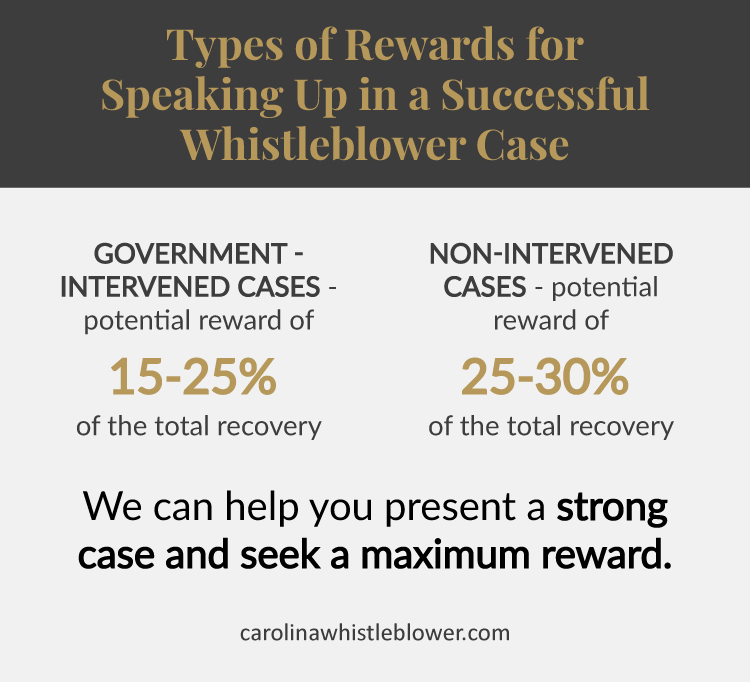
Intervention means the government will have primary control over the case while you and your attorney participate as needed. This is generally a very positive development. It means the full weight and resources of the United States are now behind the case.
Most intervened cases are resolved through a settlement, but the government is fully prepared to take the case to trial if necessary. If the case is successful after intervention, the relator is generally eligible for a reward of 15% to 25% of the total amount recovered by the government.
Declination means the government has chosen not to take over the case. This does not necessarily mean your case is weak. The government declines cases for many reasons — limited resources, a case that is too small for them to pursue, or a strategic decision to focus on other matters.
If the government declines, you and your attorneys have a choice. You have the right to proceed with the lawsuit on your own, litigating the case privately on behalf of the government. This is a significant undertaking that requires a lawyer. At Carolina Whistleblower Attorneys, we have the financial resources, experience, and resolve to go toe-to-toe with a well-funded corporate defendant.
If you choose to proceed and are successful, your potential reward is higher to compensate for the additional risk and effort. A relator in a successful declined case is generally eligible for a reward of 25% to 30% of the government’s recovery.
The final step is the resolution of the case, which can happen through a settlement or a trial verdict. The vast majority of resolved False Claims Act cases end in a settlement, where the defendant agrees to pay a certain amount to resolve the allegations.
If the case is successful, your legal team will negotiate with the government to determine your “relator’s share,” or the percentage of the recovery you can receive as a potential reward. This amount is based on several factors, including the significance of your information, the quality of your assistance to the government, and whether the government intervened. These rewards can be substantial, often reaching millions of dollars.
But the reward is more than just financial. By coming forward, you have played a heroic role in helping stop corporate greed, protect vital government programs, and possibly recover taxpayer money that was stolen from the public.
The False Claims Act contains powerful anti-retaliation provisions. If your employer fires, demotes, harasses, or otherwise discriminates against you because of your lawful acts in furtherance of an FCA case, you may be able to file a separate claim for relief. This can include:
These protections are designed to help you avoid having to choose between your job and doing the right thing

The whistleblower process is complex, and the stakes are high. It requires courage to come forward and an experienced advocate to guide you. If you have witnessed fraud against the government, you don’t have to figure it out alone.
Carolina Whistleblower Attorneys is led by a former U.S. Attorney who helped lead the nation on whistleblower recoveries, giving us invaluable insight into how the government evaluates and pursues these critical cases.1,4 Our team has the vast resources and experience to invest in your case and stand up to powerful opponents.
You have the power to help hold wrongdoers accountable. We have the experience to help you every step of the way. Contact Carolina Whistleblower Attorneys today at 1-888-292-8852 or through our online form for a free, 100% confidential case evaluation. We can help you understand your rights, your protections, and the path forward.







If you’re wondering if it’s a good idea to speak with a whistleblower lawyer about what you know, let us set the record straight.
"*" indicates required fields